-
World Poetry Day

Happy World Poetry Day!
This is a perfect day for you poets to get hands on with your poetry – but also the perfect day for you non-poets to start your path to poetry!
Luckily, for those wanting to get deep into poetry reading, I’ve handily compiled a list of poetry publications, all on offer within Catalyst. I’ve touched upon a range, including US poetry, BAME, anthologies and translated poetry.
- Claudia Rankine, Citizen, 811.6/RAN
- Valzhyna Mort, Factory of Tears, 891.799/MOR
- Forrest Gander, Core Samples from the World, 811.54/GAN
- Mina Loy, The Lost Lunar Baedeker, 811/LOY
- Edge Hill Press, Atlantic Drift, 821/BYR

There are hundreds of other poets within Catalyst, but these are a few starting points for those wanting to sink your teeth into well-written, strong poetry. Why not use the library catalogue to search for other poets and anthologies yourself?
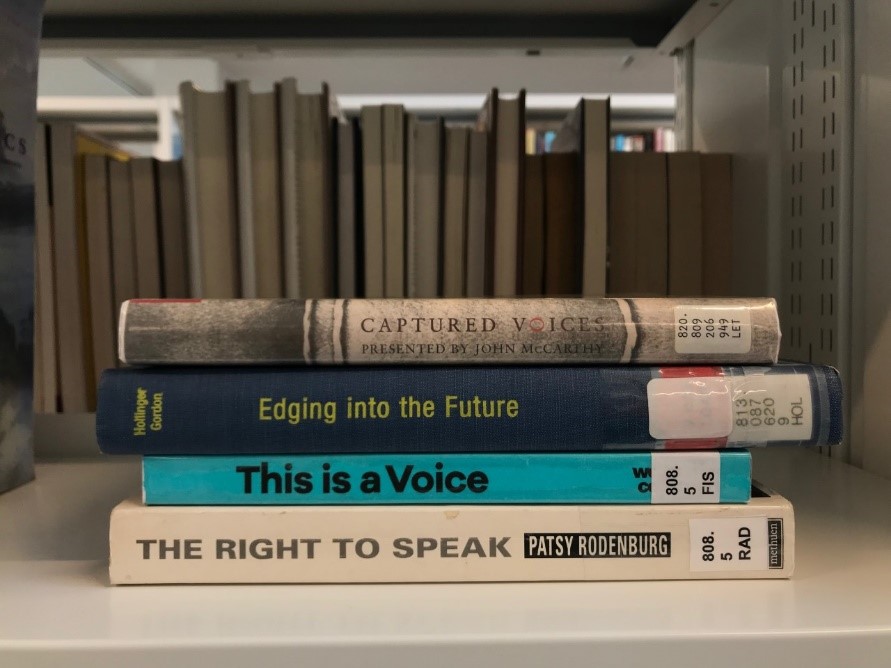
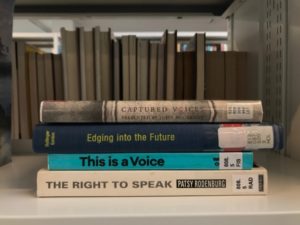
If you’re struggling to get started with your poetry, don’t worry, there are exercises you can try. Why not write a book spine poem? Here is my blog post on book spine poetry for you to try out.
Also, why not try blackout poetry? Blackout poetry involves taking a page of a book (a photocopy would be best) and blacking out words to have fewer words that create a poem! This exercise can forge brilliant lines that you can use in your poetry or can make interesting poems themselves. Why not give it a try in Catalyst?

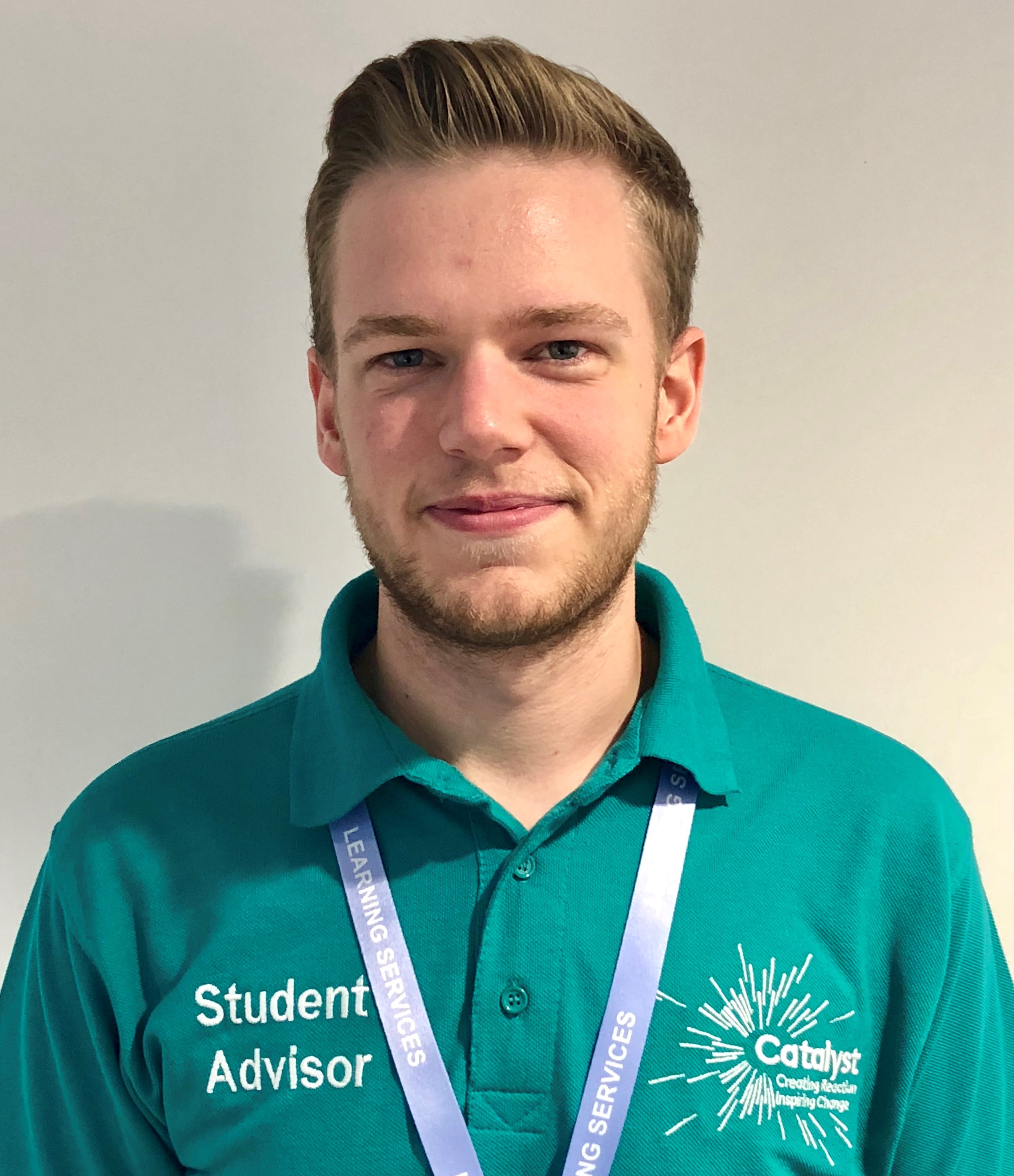
Written by: DYLAN BOOTH
3rd Year BA Creative Writing Student
Student Advisor for Library and Learning Services
-
National Conversation Week
What is National Conversation Week?
Sometimes we get lost in our phones, whether it be social media, texting or emails. Occasionally, we get so engrossed that we forget how to speak to people in our day to day lives – without resorting to memes or funny pictures. Although there is nothing wrong with that, it can be nice to have a conversation that is not made up of emojis and gifs. National Conversation Week is designed to help us embrace talking to our peers in a more meaningful way or a different way to how we normally would. I am guilty of keeping conversations with my friends going just by sending funny videos and pictures. By the end of the conversation I have often not learnt anything about how my friend is doing or shared anything about my own day. That is why this week I am aiming to reflect on each of my conversations and how they have benefited myself or somebody else.
How can I improve my conversations?
Edge Hill offers free access to LinkedIn Learning which is a website that lets you do courses in a variety of topics such as time management, leadership skills and how to have successful conversations. There are a range of short courses centred around conversations and you can even get a certificate at the end of it!
If you want to take your learning further there are plenty of TED talks on the art of having meaningful conversations.
I found the TED talks to be very insightful. There is one called ‘10 ways to have a better conversation’ which I enjoyed very much. Celeste Headlee put an emphasis on the importance of face to face conversations, taking the time to listen to people as well as being open minded and kind. Why not put it to the test? You might be amazed by all the exciting things that you learn about people and the world.
The benefits of National Conversation Week
- It gives us a chance to reflect on how we converse with people and give meaning to our interactions
- We can learn new tips and tricks on how to improve the quality of conversations we have
- It could help improve relationships with family and friends
- The skill of conversation is important when making new friends at university
- It can also help us communicate better and in a clearer way with our lecturers and personal tutors
Some tips on how to have good conversations:
- Be polite
- Ask questions. This will encourage the person to go into more depth and to help you have a clearer image of what they are trying to communicate
- Do not be afraid to say you do not know or understand something. Bill Nye said, “everyone you will ever meet knows something you don’t”. This is a useful tip to keep in mind
- Go into conversations with an open mind. If you start every conversation with the mentality that your mind will not be changed, then you will not learn anything, nor will the conversation be helpful
- Listen – this may seem obvious, but how many times have you found your mind wandering during a conversation?
You can still use your phone!
National Conversation Week is not about trying to reduce people using their phones and other devices. These are important for keeping connected in a modern world. Perhaps you’ll feel inspired this week to have more meaningful conversations with your friends, and try to have more face to face conversations.
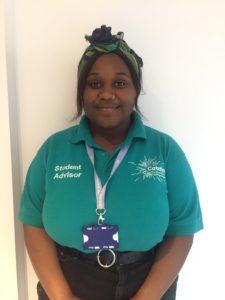
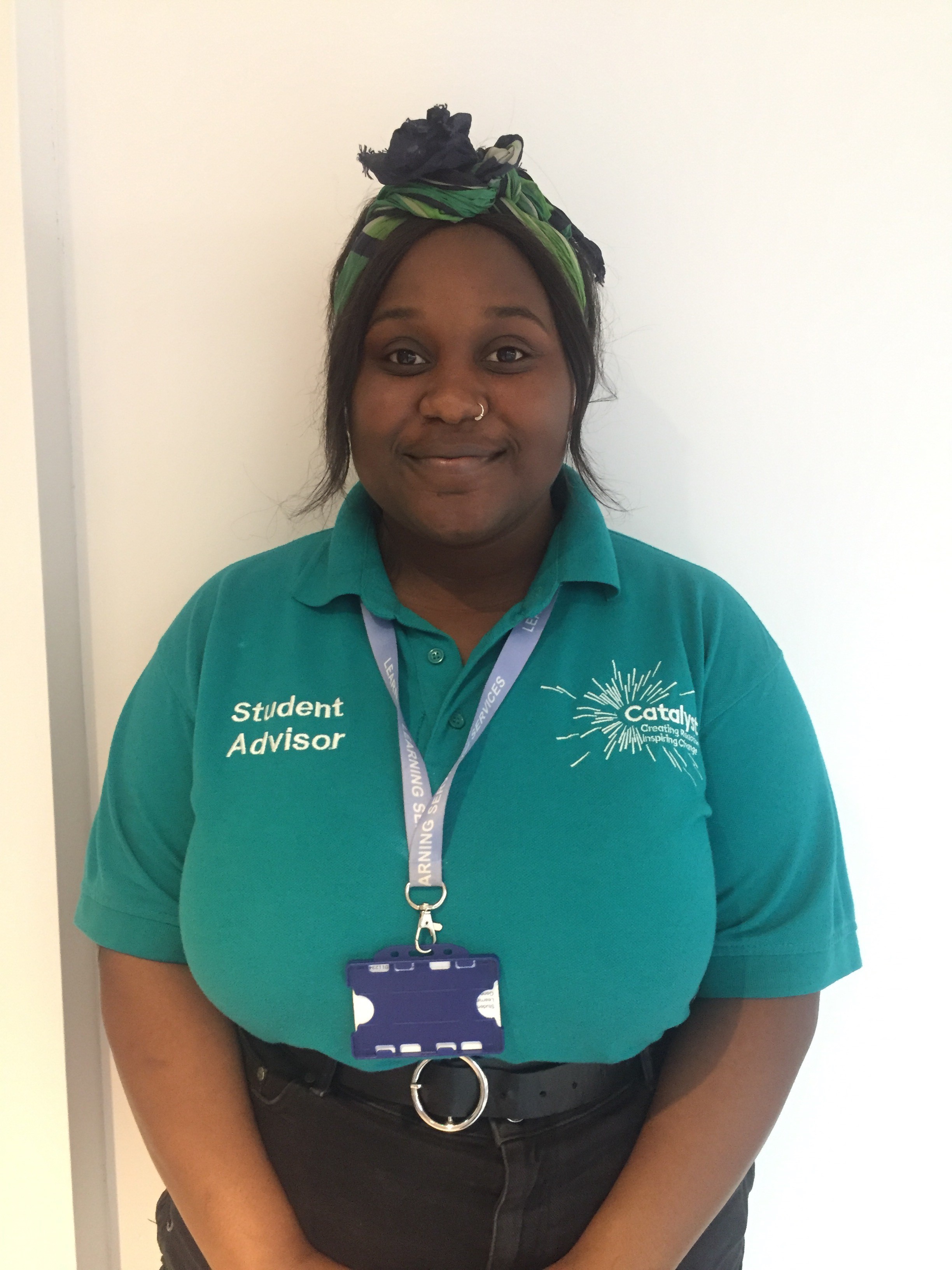
Written by: NATASHA TAPERA
2nd Year BA Counselling and Psychotherapy
Student Advisor for Library & Learning Services
-
UniSpeaks – Our Ethos
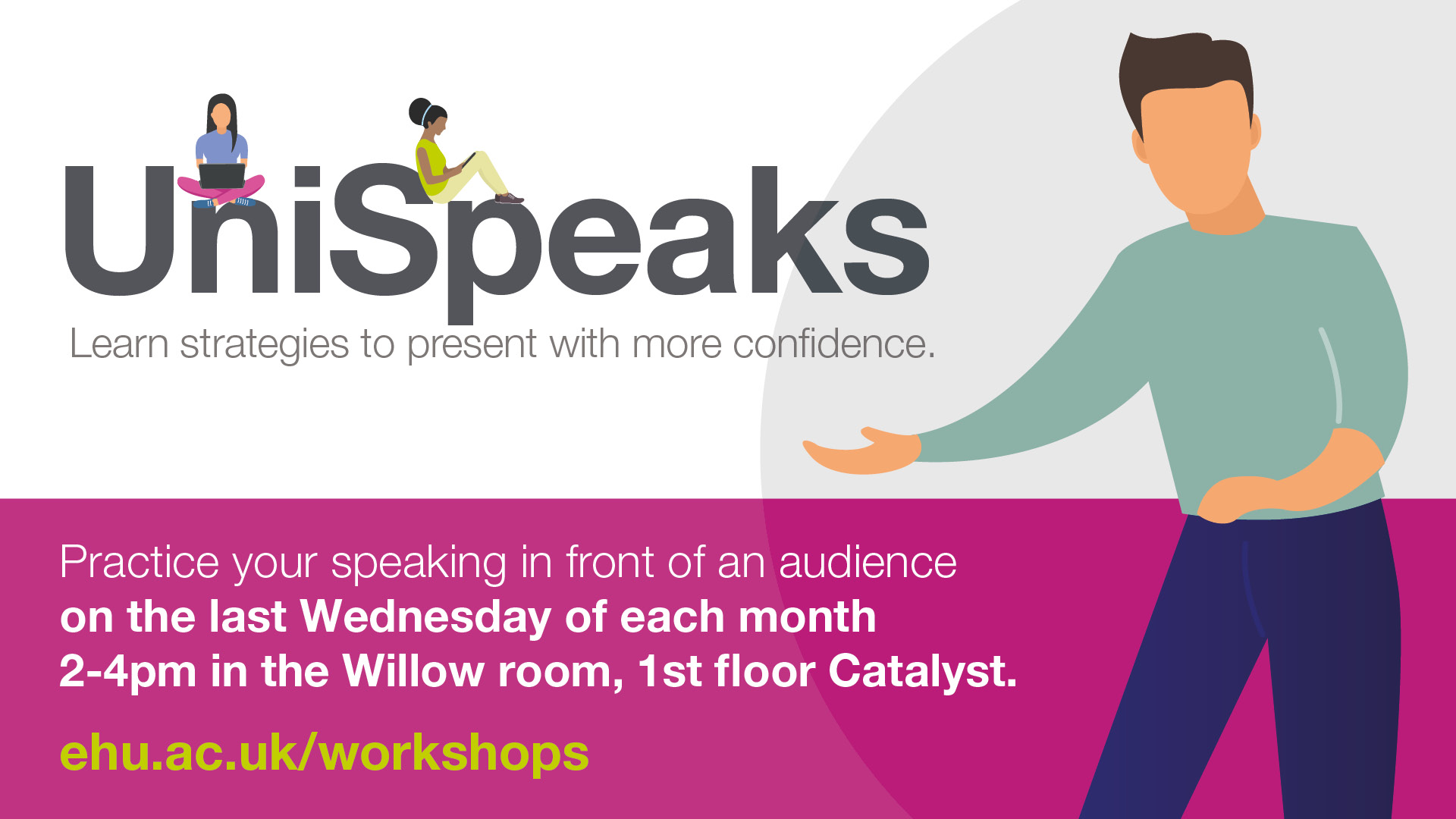
Through UniSpeaks we are building a community of positive support where those new to presenting or nervous about speaking in front of an audience can learn strategies and techniques to develop their confidence. UniSpeaks offers an opportunity for students to develop their own style in a safe space and enjoy peer-to-peer encouragement in a welcoming environment.
To ensure that we continue to offer our students the best experience, we did some research! Public speaking comes in many guises and, for most, the road to becoming a confident presenter has been a long one. Lots of speakers who now appear confident will admit to starting out a bundle of nerves and even doubting their own abilities. With this in mind we felt it was important for us to attend some speaking events, where we could witness for ourselves how these skills are developed.
So, we began big… TED talks are well-known globally for being one of the leading public speaking platforms in the world and they are accessible to the public through independently organised TEDx events. With TEDx Manchester taking place on Sunday 3rd February 2019, it was too good an opportunity to miss! We were able to witness an array of topics, speakers and styles. From the bold and exuberant to the quietly confident, all the presenters captured our attention and inspired us in numerous ways. Having learned how the seasoned speakers engage their audience, we then moved to focus on how we could successfully facilitate a safe space for public speaking.

To do this we decided to tap into current local events with the same ethos. We spent an evening attending the brilliant Ignite Liverpool, which brings together a range of ‘creators, thinkers, innovators, makers and dreamers’ to present in front of members of the pubic in an informal and intimate setting. By attending this event we identified the value in setting up a space where students can come together and support each other without our intervention. We came away idea-poppingly inspired, not only by the incredible range of fascinating topics presented, but by the enthusiastic, supportive and nurturing environment. The event was so motivating, that we are even considered the possibility of delivering our own presentations at the next event in May!
 The combination of seeing public speakers on the big stage at TEDx Manchester, and the small stage at Ignite Liverpool, helped us to really appreciate the need for a small, local Community of Practice where anyone can share their experiences, and develop their confidence alongside their peers.
It was at this point we decided to delve into the pedagogy, identifying that routinely getting likeminded people together to share their knowledge (Wenger, McDermott and Snyder, 2002) could reap benefits in terms of developing communication skills and even a bank of useful resources (Bing-You and Varaklis, 2016). We also discovered that Communities of Practice tend to function well when they’re left to simmer on their own – to grow organically as ‘a process rather than an entity that can simply be set up’ (Pyrko, Dorfler and Eden, 2017: 390). For this reason, we’ve held back on some of our usual marketing, trusting instead in growth generated through the community’s own outreach.
We are proud to be creating UniSpeaks at Edge Hill and look forward to welcoming more students to be part of this innovative new venture. If you’re feeling inspired to join us book your place here (sessions take place on the last Wednesday of every month).
BING-YOU, R. G. and VARAKLIS, K., 2016. Organizing graduate medical education programs into communities of practice. Medical Education Online. 21 (1), pp. 1-6.
PYRKO, I., DÖRFLER, V. and EDEN, C., 2017. Thinking together: What makes Communities of Practice work? Human Relations. 70 (4), pp. 389-409.
WENGER, E., MCDERMOTT, R. A. and SNYDER, W., 2002. Cultivating communities of practice: a guide to managing knowledge. Boston, Mass: Harvard Business Press.