A New Staff Network – Parents and Carers of Neurodivergent/SEND Children.
The Development of the Parents and Carers of Neurodivergent/SEND Children Staff Network.
The Purpose Behind Forming the Parents and Carers of Neurodivergent/SEND Children Staff Network.
Following a recent staff awareness session at the annual Neurodiversity event Embrace, Support Empower, several colleagues approached Anna to express their need for tailored support in navigating SEND (Special Educational Needs and Disabilities) pathways while also managing their responsibilities at home .
In direct response to this insight, we have established a new network that is designed to meet the specific needs of our staff community. This network is built on the valuable lived experiences of our colleagues and will continually evolve based on their input, ensuring it remains relevant and impactful.
How This Network Will Support You
The group’s initial aim is to simply bring colleagues together for relaxed, supportive conversations. We know that none of us have every answer—but what we can offer is a safe space, a listening ear, and a mix of lived and professional experience that can make a real difference.
As the group grows, we’ll shape its purpose and terms of reference together. This way, staff voices stay at the heart of everything we do, helping the group evolve in a way that feels meaningful.
We’re really looking forward to meeting everyone and seeing how the group develops—and the positive change it could spark along the way.
Who can join?
The group is intended to be diverse and inclusive, and this is not an exhaustive list:
Parents/carers/supporters navigating neurodivergent pathways/referrals and assessments.
Parents/carers/supporters who have children with diagnosed/undiagnosed neurodivergent/SEND needs.
Parents/carers/supporters considering whether their child may have neurodivergent/SEND needs.
Anyone with a personal or professional interest in this area.
Meet your Network Leads
Anna Paxman Learning Support Co-ordinator
I have spent nearly 20 years working in disability support across both FE and HE, and I’ve been part of Edge Hill University’s Specific Learning Differences (SpLD) Team since 2018. I’m currently completing a Master’s exploring the learning barriers and lived experiences of female mature students with SpLD—looking at how societal attitudes influence their identity, confidence, and academic journeys, and how their insights can shape more effective support. I also bring personal experience to my work, having gone through an adult SpLD assessment myself and navigating neurodivergent pathways and referrals for my child.
Leon Fraser Senior Lecturer in Physical Education
Since joining Edge Hill in 2013, I have been a Senior Lecturer in Physical Education at Edge Hill University, bringing over 25 years of teaching experience across secondary schools in the Northwest of England and Yorkshire. I have contributed extensively to the ITE Secondary Physical Education PGCE with QTS programme and as the Faculty of Education’s Senior Safeguarding Lead along with 4 year service as a school governor. As part of his Teaching and Learning Fellowship at Edge Hill, I have focused on improving support for neurodivergent students, promoting a proactive, equitable, and research‑informed culture across the institution. My latest research also explores how neurodiverse trainees and mentors can implement meaningful adjustments aligned within Early Career Teachers. This coincides with real‑world practice
through a published peer reviewed book chapter on ‘photo‑elicitation methods in researching disability in physical education
Aisling Barker – OD Team
My role in supporting the network is to enhance the employee experience for colleagues who are navigating neurodivergent or special educational needs and disabilities (SEND) pathways within their families. I recognise that these responsibilities can be both emotionally and logistically challenging, especially alongside work commitments. The group aims to create a supportive and understanding environment where staff feel comfortable sharing their experiences without fear of judgment. I want to ensure that colleagues feel valued, supported, and better equipped to manage these journeys both personally and professionally. Aisling Barker – External Charters Manager
What are the factors surrounding children requiring assessments and support?
Colleagues have shared that they have encountered unhelpful and, at times, offensive comments regarding the perceived increase in neurodivergence. These conversations have included remarks such as “everyone thinks they’re neurodivergent” and “everyone is a bit autistic.”
The information below outlines several factors that have contributed to more people seeking and receiving neurodivergent diagnoses.
Greater Awareness Among Parents, Teachers, and Health Professionals
Improved diagnostic tools. Awareness campaigns and advocacy.
Diagnostic Criteria Have Expanded and Evolved
Conditions previously understood only in their most severe forms are now assessed across a wider spectrum of presentations.
Reduced Stigma and Increased Acceptance
Changes in language and awareness have led to a social model viewing neurodivergence as a natural variation rather than a deficit.
Better Identification of Groups Historically Missed
More awareness of ‘masking’ particularly in girls.
Disparities are decreasing as minority groups gain more access to services
Improved training for practitioners helps identify children who previously would have been overlooked.
Post‑Pandemic Effects
Increased behavioural, emotional, and sensory differences becoming more visible when children returned to school after lockdown.
Greater parental concern after observing children at home throughout remote learning.
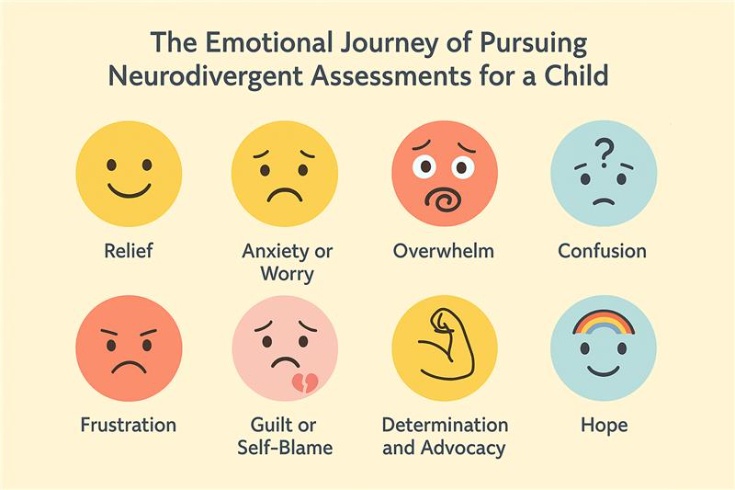
The Emotional Landscape for Families Navigating SEND Pathways
Positives
Negatives
Relief Many parents feel relief simply because they are finally being heard and supported.
Worry and Uncertainty Concerns about the future, waiting times, and the unknown.
Determination Despite the challenges, parents may develop more determination from wanting the very best for their child.
Overwhelm and Confusion Navigating complex systems, forms, and mixed messages from services.
Advocacy Although this is a stressful time, parents can develop advocacy skills through researching, attending meetings, challenging decisions and seeking second opinions
Frustration Delays, barriers, and feeling like they must constantly advocate.
Hope Alongside the stress, there is often hope for better understanding hope for tailored support and hope that their child will thrive with the right help. Assessment can feel like the gateway to a more positive and informed future.
Guilt or Self‑Doubt Wondering if they missed signs or could have acted sooner.
A Closing Reflection
The creation of the Parents and Carers of Neurodivergent/SEND Children Staff Network marks an important step in ensuring that colleagues who are supporting children through neurodivergent or SEND pathways feel recognised, understood, and less alone. The experiences shared by staff underline just how complex, emotional, and often overwhelming these journeys can be—yet they also highlight the strength, determination, and hope that so many parents and carers carry with them.
By bringing people together in an open, non‑judgemental space, the network aims to foster connection, compassion, and practical support grounded in both lived experience and professional insight. As the group grows, its direction will be shaped collaboratively, ensuring that it remains responsive, meaningful, and truly reflective of the community it represents.
Ultimately, this network is about more than sharing challenges—it is about building confidence, reducing isolation, and empowering colleagues to navigate SEND and neurodivergent pathways with greater clarity and support. We look forward to meeting you and seeing the positive impact this community will create, both for staff and for the families they care for.