
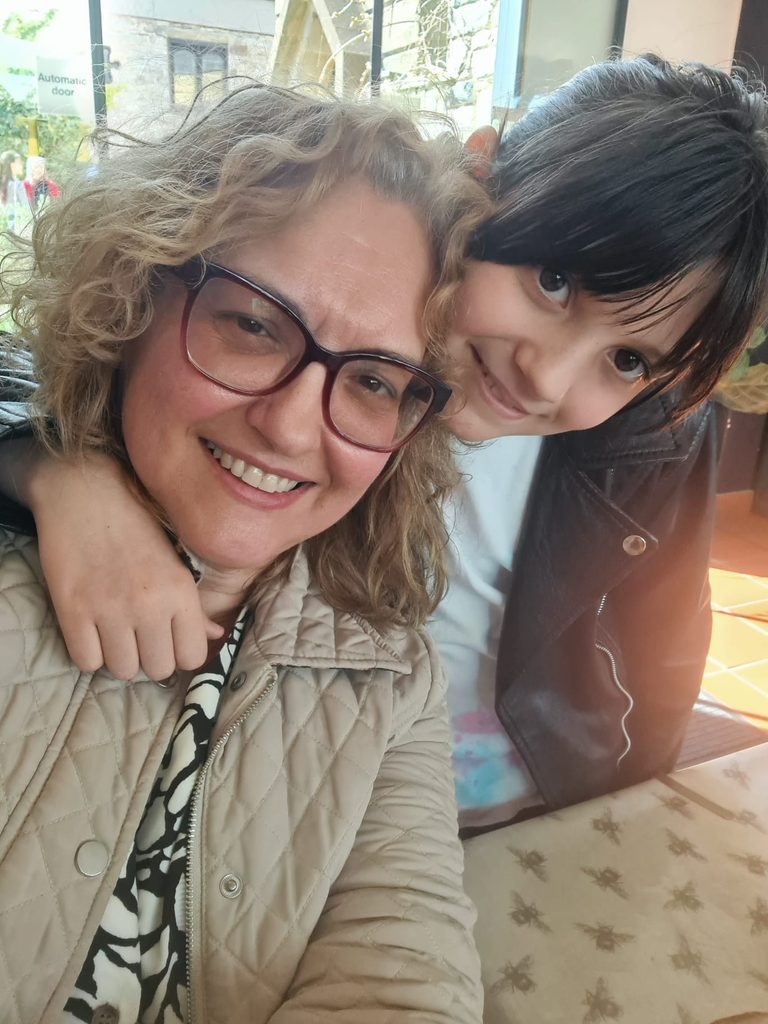
Gema Denia is an experienced music educator with a BA in Classical Guitar, Advanced Solo Studies from the Guildhall School of Music & Drama, a PGCE and an MA (Phil). She currently works at Mayfield School in Torquay.
Our ‘Autism Friendly’ school
In 2014, and with very little experience working with children with Special Needs, I started working in a school in London that had a unit for autistic children.
All staff were trained on matters of autism, coping mechanism, how to support the students with their multiple needs, issues related to sensory issues and possible co-occurring conditions. We learnt techniques on how to respond to avoidance, to perceived lack of engagement, to over-enthusiastic reactions, how to support communication with sign language and visual aids when there were language barriers. As teachers, we understood that liaising with learning mentors, parents, carers, class teachers, subject teachers, dining room and playground supervisors would be key to support progress with autistic children. We applied PALM (Pause, attune, label and model) to deal with emotional dysregulation, used a bag to bring excitement to a “What is in the bag?” activity and sang “We are going to…” songs and carried “Now and next” cards to help with transitioning anxiety.
An inclusive school. A gem. A joy. A gift. Please, see reference to the article, written by the school SENCO at the time that summarises what was done and how it was done “Creating ‘Autism Friendly’ education in an inclusive mainstream primary school” (Lloyd, 2019).
Music interaction
During that time, I also had the opportunity to work with a group of experienced musicians working with autistic children and adults, as well as their families using music in sessions called “music interaction” with the purpose of developing language, turn taking and music making. Music Interaction sessions were tailored to fit the individual, their likes and preferences, their sensory needs and their pace of learning. The result of applying this method of music therapy with autistic children is wonderful.
My teaching style up to that point was based around the concept of scaffolding to develop learners’ skills and abilities as well as around planning following the English National Curriculum for Music (DfE, 2013). During Music Interaction sessions, fixed structures and expectations are left outside as much as possible, so the child has space to lead.
A certain structure is used to shape the session, and some chants and starter/ ending calls are used but mostly the adults in the room create a music canvas that, the child feels safe to navigate and grow at his or her own pace. Music making around the child. Sound and silence. “More” music is asked by the child, or not. The tempo is adjusted to his or her mood and the child is given control, in a way they have never experience before. They are happy to sing the end of lines of songs, known tunes or made up on the spot ones. Playing instruments freely, as well as dancing, is encouraged.
Final destination: Inclusion
I started my journey as a teacher in 1993 as a peripatetic guitar teacher in Enfield. Since then, I have taught music in primary and secondary schools across state and private educational settings in England and elsewhere in the UK. I have also worked in several early years educational settings, teaching music, art, languages and extra-curricular activities. Across all these settings, the same principle has remained central: music can help teachers become more aware of, and responsive to, children with special educational needs. The guidelines below draw on this experience and offer practical ways to create inclusive, autism-friendly music lessons.
Teaching Music in Early Years including children with traits of Autism
As a music specialist, I would like to share the structure and content of a typical music lesson for a Nursery or Reception class in an autism-friendly environment.
Use music when emotional dysregulation dominates the classroom, especially during the first few days at school. Music can build bridges that help children feel safe, connect with others and begin to reach their full potential.
Tip: Get yourself a cheap ukulele. I carry one with me everywhere (and I teach all subjects in secondary schools these days) There is nothing I can say or do that brings more joy to my classes that when I strum the chords of C, F and G to the Bamba or Jungle Book songs. And yes, I do get a smile from the autistic students at that point. They smile because they probably think I am a bit unconventional, perhaps a little different from most people they know. But when they look at me, they have acknowledged me. The next time they see me, they will feel seen, recognised and safe.
When teaching a performing art, what happens on the day, in the lesson and in the moment, is an irreplaceable experience. This experience can be understood through what the Ancient Greeks called Katharsis, or catharsis: the purification of the emotions, especially pity and fear, through the arts (poetry, music and dance).
‘The proof is in the pudding’ is an expression that means the value, quality, or truth of something must be judged based on direct experience with it—or on its results. As an EY practitioner, you will or will not be able to see the pudding, but you will be able to throw the stone and create the ripple effect that will facilitate the process of future progress. Please, do. It matters.
Suggested Music Lesson Structure
- Hello song, any. The importance of calling the child’s name in a friendly tone.
- Hot potato song, circle activity with a “Pass it On” song with an object (not necessarily a potato) to start with, and followed by an Instrument, then two and up to 4, always introduced this way. The excitement of waiting is reduced but waiting and sharing is still practiced – turn taking anxiety might be diminished by allowing the child to have one instrument in hand whilst waiting for the one going round the class circle.
- Music to play Musical statues, listening to sound and silence. Stop when the music stops. However, silence is the instruction. No words called out. Lack of sound, lack of movement, lack of words. Facial expressions might be encouraging, sign language or modelling freezing postures. Allow sounds/words/ movement from the child. Encourage the use of language to say “more” and use “ready, steady, go and work on the transition to get them to say “go” following your pause after “steady”.
- Keep the pulse song, any. With the intention of helping the child to listen to you, you might need to listen to them first. When a child uses movement to self-soothe, regulate or express emotions by fidgeting or stimming, you can use your eyes to hear the inner pulse of the child. You may attune to his or her pulse, and that way you may be able to bring it down and help to: 1, create a connection and 2, help the child to regulate.
- Jump song. Any action songs are great for proprioception and for vocabulary.
- Stop during a song, any. This activity allows us to give a simple instruction and to give the control to others. Using the word “stop” or a chosen sign, you are giving the control to children that usually have no access to share their wishes with others by any means of communication. That is empowering.
- Nursery rhymes, the more the merrier, use props, images, puppets, videos, and repeat ‘ad nauseum’. Be aware, those kids think they are singing. Yes, when they look at you nodding, and smiling, their brain thinks they are singing. But one day, the kids will sing, you will praise them, and they will wonder why. From their perspective, they had always been singing. Use of movements, actions, visuals, cards, and sensory bags to add richness to your songs.
- A few unpitched percussion instruments (make sure you cover skin, metal and wood, hit, shake and scrape)
- A few pitched instruments (glockenspiels, metal bars, ukuleles, boom whackers).
- An interactive board, if you may, to show dance videos and action songs. A perfect opportunity to be part of a group activity and feel the joy of music whilst dancing. The song “I am a Gummy Bear” must be the most played song in my teaching repertoire. Be aware of personal choices. Having a “now and next” card or “We have finished” song is advisable.
- A Good bye song, any. Transitioning songs will help the child to give the session closure. Now and Next cards may be used at this point and a new song to transition in the direction of the next activity is advisable.
You need your singing voice and an instrument. You don’t need to be an amazing pianist, nor a great singer, but music made by you will be your secret code to communicate with all children, particularly those whose spoken language is not as developed at this stage as others.
References
Department for Education. (2013). National curriculum in England: music programmes of study. GOV.UK. https://www.gov.uk/government/publications/national-curriculum-in-england-music-programmes-of-study/national-curriculum-in-england-music-programmes-of-study
Lloyd, E., (2019). Creating’Autism Friendly’education in an inclusive mainstream primary school. Good Autism Practice, 20(2). https://research.ebsco.com/c/wrulqo/search/details/sbuj2nuwqv?request-context=plink&db=ehh
