
Written by Chelsea Phelps, early years teacher and children’s author.
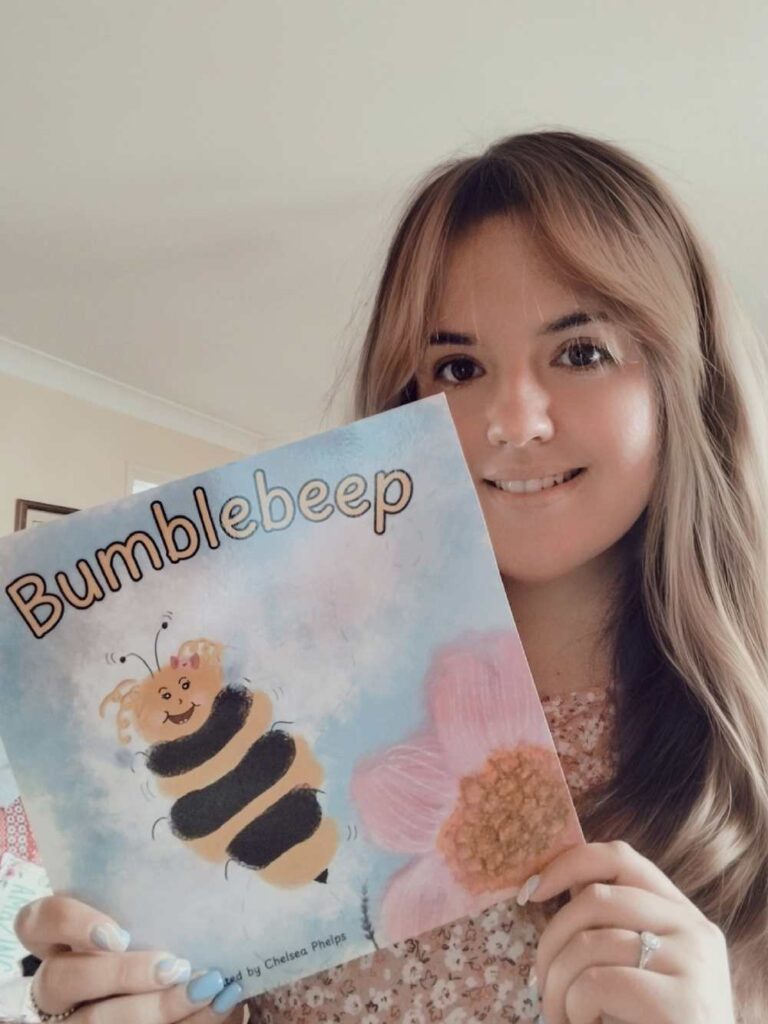
The idea for this story was inspired by my time in the classroom, where I often saw children, especially those with special educational needs (SEN), struggling to find their place in play and friendship groups.
I’m Chelsea Phelps, an Early Years Teacher and children’s author. I completed my BA in Fine Art at the University of Central Lancashire in 2017 and my PGCE in Early Years Education at Edge Hill University in 2022, where my love of early childhood development, creativity, and inclusive education all came together. My journey into teaching has been shaped by a strong belief that every child deserves to be seen, celebrated, and supported in who they are.
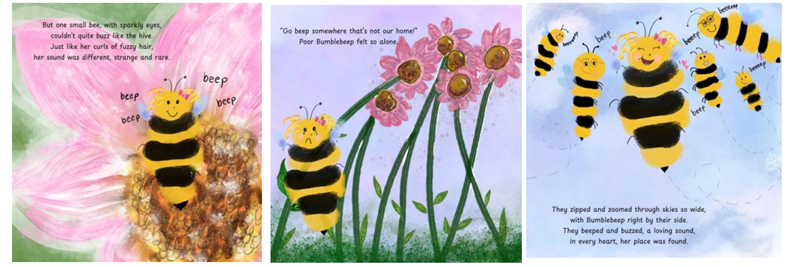
My debut picture book, Bumblebeep, follows the story of a little bee who beeps instead of buzzing. The idea for this story was inspired by my time in the classroom, where I often saw children, especially those with special educational needs (SEN), struggling to find their place in play and friendship groups. I was also deeply influenced by my wonderful niece, Sophia, who has autism. I remember watching her trying to navigate her time in school, finding her own way to connect with others. I’ve also witnessed the kindness and openness of so many children, who welcome their peers with SEN without hesitation and that’s the main purpose of the story. Bumblebeep is my way of celebrating difference and encouraging kindness and for all children to embrace what makes them unique, even if they don’t quite “buzz” like everyone else.
During my PGCE, I learned just how powerful storytelling can be in the early years classroom. It helps all children express emotions, build communication skills, and understanding others. Bumblebeep combines my love of illustration, lyrical language, and inclusive education and it’s been a joy to see how children respond to it.
In my teaching, I bring stories like Bumblebeep into the classroom every day. I believe picture books can open doors to empathy, spark important conversations, and help every child feel like they belong.
Storytelling is not only an educational tool but also a fun way of connecting with children, especially those with additional needs. Picture books are often described as “mirrors, windows and sliding glass doors” (Bishop, 1990): they reflect children’s own lives, offer glimpses into the lives of others, and invite them to step into imaginative new worlds. For children with special educational needs (SEN), such stories can reduce feelings of difference, helping them to feel included, valued, and understood (Ainscow, 2020; NCSE, 2014).
My story Bumblebeep shows how playful narratives can celebrate individuality. A bee that beeps instead of buzzing invites children to see that being differentcan also be wonderful. In early years classrooms, these stories model kindness and acceptance – values at the heart of the curriculum (DfE, 2021). The rhythmic text and playful illustrations not only make the tale fun to share aloud but also provide accessible entry points for children with speech, language, or communication needs (EEF, 2020). When teachers bring inclusive stories into daily practice, they do more than teach literacy. They create spaces where every child can laugh, imagine, and feel proud of who they are.
References
Ainscow, M. (2020) ‘Promoting inclusion and equity in education’, NJSEP, 6(1), pp. 7–16.
Bishop, R.S. (1990) ‘Mirrors, windows, and sliding glass doors’, Perspectives.
Department for Education (DfE) (2021) Statutory framework for the early years foundation stage: Setting the standards for learning, development and care for children from birth to five. London: DfE. Available at: https://www.gov.uk/government/publications/early-yearsfoundation-stage-framework–2 (Accessed: 4 July 2025).
Education Endowment Foundation (EEF) (2020) Special educational needs in mainstreamschools: Evidence review. London: EEF.
Jones, R. and Hodson, P. (2020) Unlocking speaking and listening: Developing talk in theprimary school. London: Routledge.
National Council for Special Education (NCSE) (2014) From exclusion to inclusion: Literature review. Trim: NCSE.
Woolley, R. (2010) Inclusion in the early years. London: Continuum International Publishing Group.
Wright, A. (2019) ‘Storytelling in early childhood: Enriching language, literacy and classroom culture’, Early Child Development and Care, 189(5), pp. 755–767
