
In June, colleagues and students from across Edge Hill University attended Flood & Coast 2026, the annual conference organised by The Chartered Institution of Water and Environmental Management (CIWEM) which was held in Liverpool for the first time. Recognised as one of the UK’s industry-leading events focused on flood risk management, climate resilience, coastal change and environmental innovation, the conference brought together academics, policymakers, industry professionals and emerging talent from across the sector to explore solutions to some of the most pressing environmental challenges facing communities today.
Leading the university’s involvement was Dr Janet Richardson, who not only attended as an academic representative from Geography and Geology subject area, but also played a key role in supporting the event through her involvement on the Future of Flood and Coastal Erosion Risk Management steering group. The conference provided an important platform for staff and students alike to share knowledge, build professional networks and engage directly with organisations working at the forefront of environmental management and sustainability.
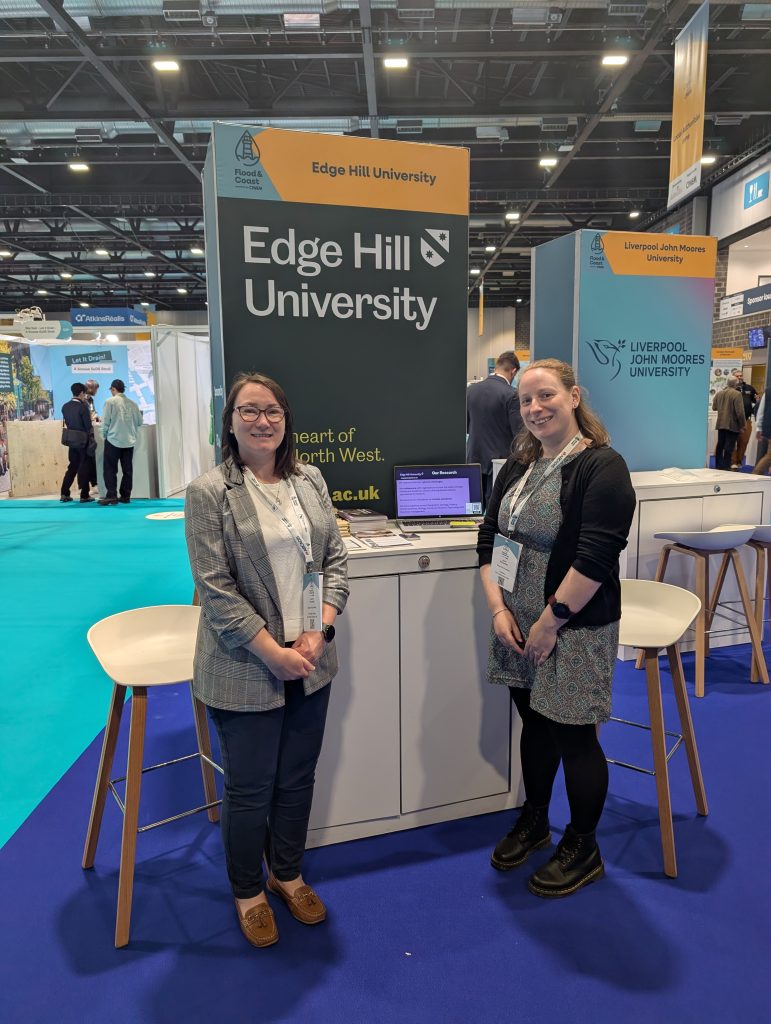
Janet said of the conference:
“This whole university experience bought together teams from Geography and Geology, Biology and Biosciences, Knowledge Exchange, Careers, and Research to have a joined-up approach in seeking opportunities with lasting impact.
Opportunities like this really allow our university to be placed alongside nearby North-West universities showcasing the fantastic work we do to national and international audiences. A key area of interest was community resilience and flooding, including the protection of historic sites.”
Throughout the event, staff and students from Geography and Geology contributed to discussions surrounding sustainability, water quality and environmental resilience, highlighting the university’s commitment to research that addresses real-world environmental issues.
One of the major highlights of the conference was a presentation session delivered by Dr Janet Richardson and Dr Anna Jones, which explored the role of sediment within river catchments and the impact it can have on environmental resilience, highlighting the importance of nature-based solutions for flood management.
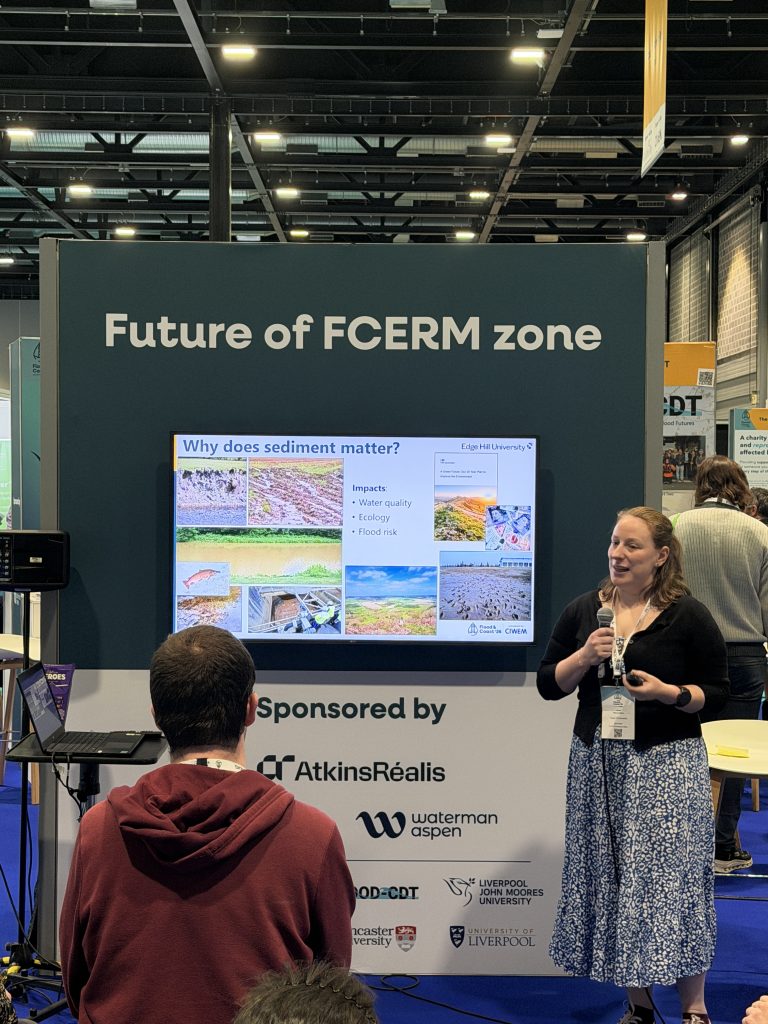
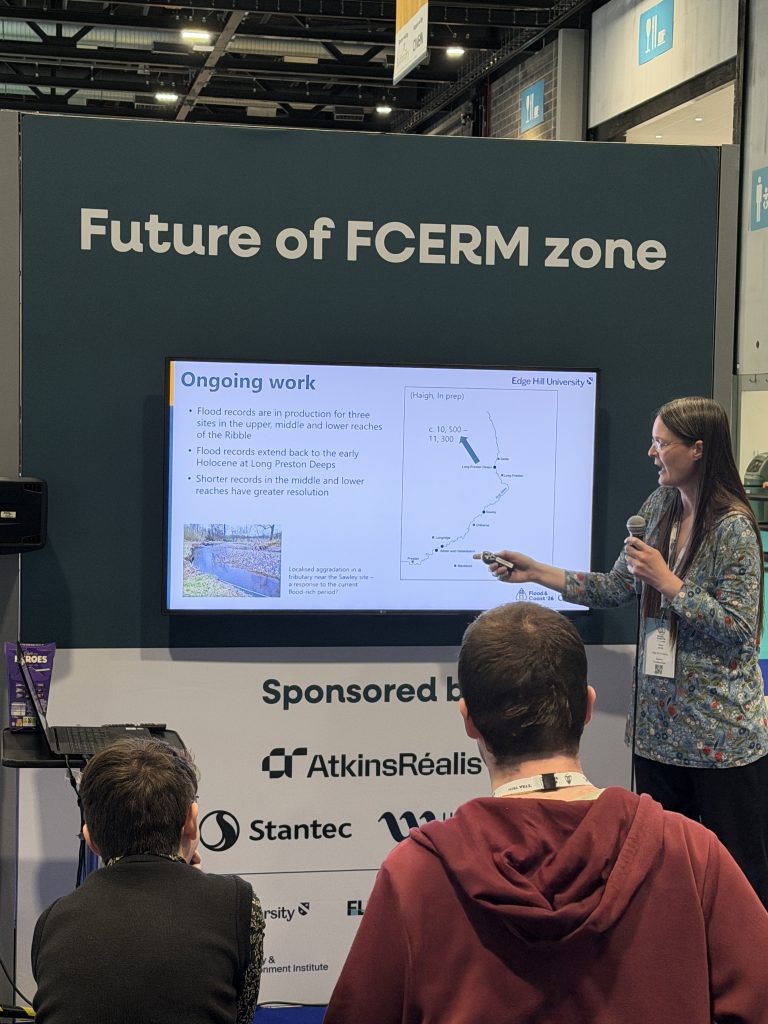
Alongside academic research, student work also featured prominently throughout the conference programme. Melissa Haddad Brojerdi presented findings from her dissertation project investigating the differences between naturally occurring and managed leaky barriers within the River Ribble catchment.
Presenting at a national conference provided Melissa with the opportunity to share her work with academics, practitioners and environmental professionals from across the sector, while also demonstrating the strength and relevance of undergraduate research taking place within the department.
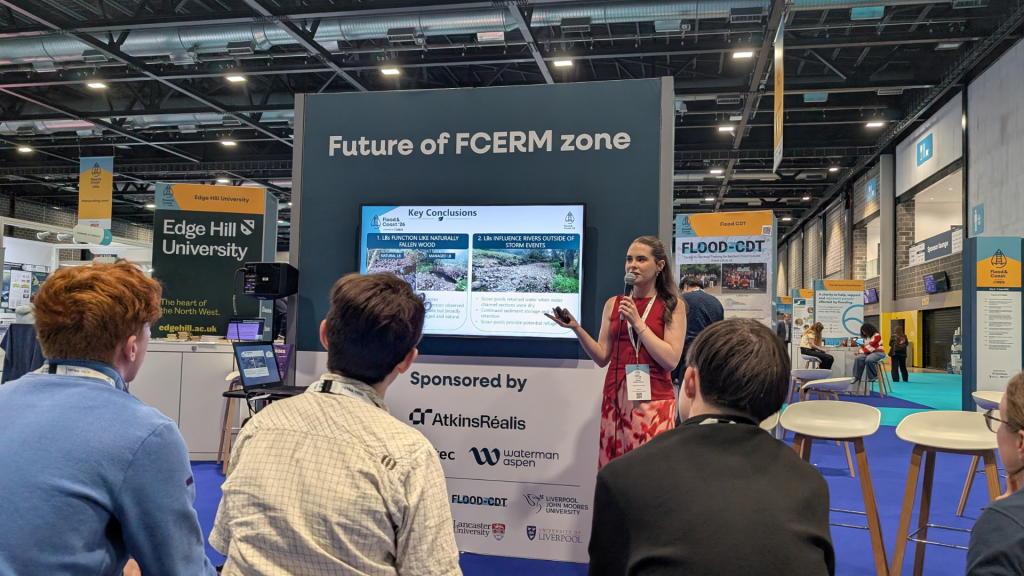
Melissa said of the experience:
“Presenting my dissertation research at Flood & Coast 2026 was an incredibly valuable experience. It gave me the opportunity to share my work with academics, practitioners and industry professionals, while developing my confidence in communicating research beyond the university environment. Discussing my project with people working in the sector helped me better understand the real-world relevance of my research and how natural flood management approaches are being applied in practice.”
Student research was further showcased through a poster presentation by Emily Gaskell, whose work focused on microplastics within the Rivington Reservoirs. With environmental pollution and water quality continuing to be critical issues within the wider sustainability agenda, Emily’s research highlighted the important contribution student-led projects can make to understanding and addressing contemporary environmental challenges.
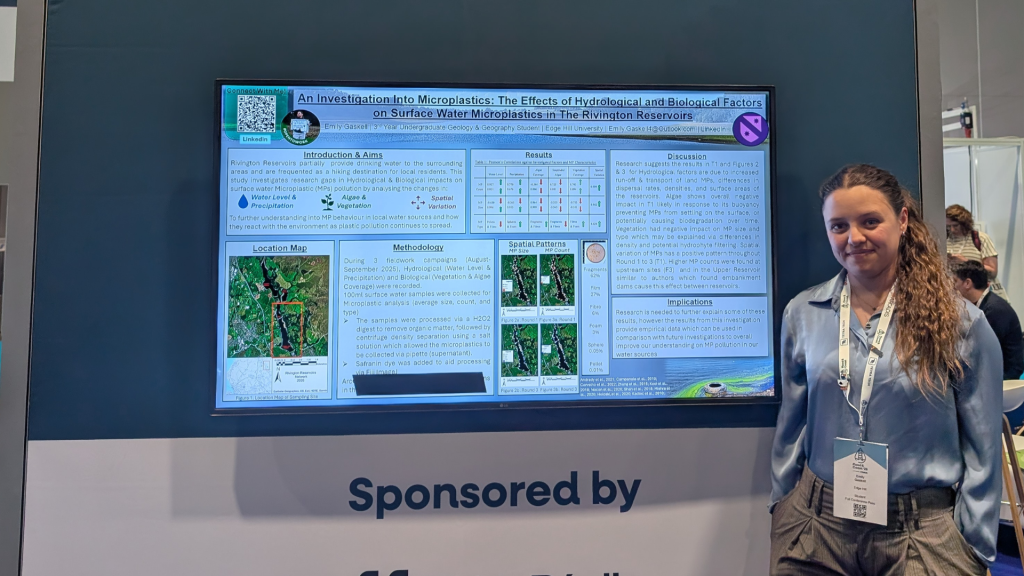
When asked about her experience of the conference, Emily said:
“'[It was] an invaluable experience which introduced me into the (not so scary) world of industry. To hear multitudes of experiences and advice from a room full of people, whilst proudly sharing my own from my dissertation project, has given me a huge boost in confidence and excitement to begin my career.”
In addition to those presenting, a number of students attended and supported the conference, made possible through free conference passes provided by CIWEM. The opportunity enabled students to engage directly with industry-informed learning, attend technical sessions, explore exhibitions and network with environmental organisations, giving them valuable insight into the breadth of careers and opportunities available across the sector while supporting the development of the next generation of environmental professionals.
The conference has been a very rewarding event to attend to gain confidence speaking to like-minded professionals who represent various companies and different sectors. It feels great to represent Edge Hill and discuss your next steps with graduate positions and jobs. If you have any questions about transitioning from academia to industry it is very likely someone will have answers for you!
Nicholas, Student
Attending the Flood and Coast conference helped me to collate ideas about research as well as allow me to network with prospective employers and individuals. I would say that it was a worthwhile experience and now I have experienced what going to a professional conference is like to add to my CV.
Catherine, Student
The university also hosted a conference stand staffed by student interns, colleagues from the Knowledge Exchange Office and members of the Geography and Geology department, creating further opportunities to strengthen external relationships and develop partnerships across academia, industry and policy.
“Flood & Coast 2026 was a fantastic opportunity to connect with industry partners, strengthen existing relationships and build new ones. There’s real value in meeting people face-to-face, sharing knowledge and discussing the challenges and opportunities shaping our sector. The event provided a great platform to grow our network, explore potential collaborations and gain valuable insights that will help us continue delivering the best outcomes for our clients and the wider industry.”
Linda Olubajo, Senior Business Development Manager from the Knowledge Exchange
As environmental pressures continue to evolve, collaboration between universities, industry and communities will remain increasingly important. Flood & Coast 2026 not only showcased the strength of research and teaching taking place at Edge Hill University, but also reflected the university’s wider commitment to supporting students, fostering collaboration and contributing to a more sustainable and resilient future.
“Flood & Coast 2026 was a fantastic opportunity to showcase our water-related geosciences expertise, enabling students and academic staff to share new approaches, research and innovation with industry, government and community stakeholders. The connections made will support not only academic research and knowledge exchange but also student placements, projects and graduate recruitment.”
Professor Cherith Moses, Professor of Geomorphology and Head of Department of History, Geography & Social Sciences (HiGSS)
