
From concept to commercial reality
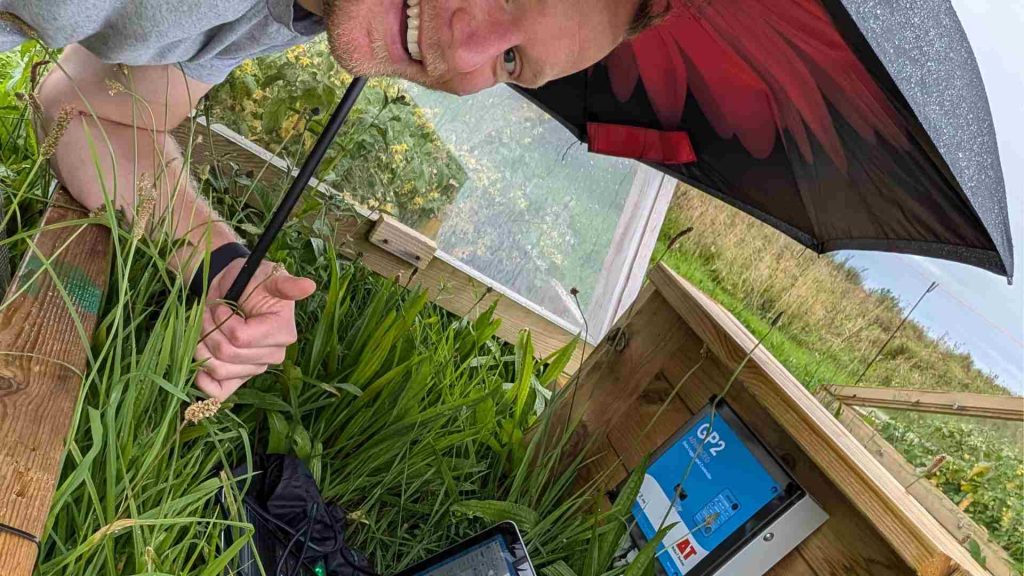
One of the biggest challenges facing greenhouse innovation is the gap between a promising idea and commercial-scale validation. Testing new materials, coatings or technologies directly in commercial greenhouses can be expensive, disruptive and often too risky for early-stage concepts. To address this challenge, the GIC and Edge Hill University have developed a dedicated mini-greenhouse research platform designed to provide rapid, cost-effective proof-of-concept testing. The facility currently supports a growing portfolio of industry collaborations, including projects with Pilkington, Renolit and Albotherm, focused on evaluating novel greenhouse glazing materials, films and coatings. These technologies have the potential to improve light transmission, crop performance, energy efficiency and greenhouse productivity, but require robust evidence before progressing to larger commercial trials.
A platform for early-stage innovation
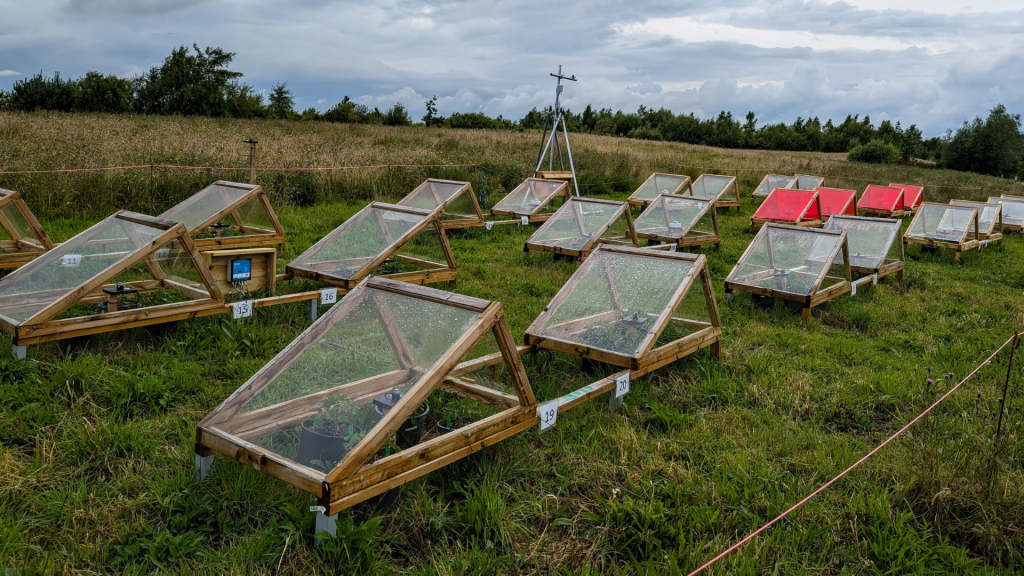
The mini-greenhouses allow researchers and industry partners to test ideas under realistic growing conditions while keeping development costs manageable. Rather than investing immediately in expensive commercial-scale demonstrations, technologies can first be evaluated at a smaller scale where multiple treatments can be compared simultaneously. This approach enables rapid iteration. New concepts can be refined, modified and retested quickly, helping partners understand what works, what requires further optimisation and which technologies show sufficient promise to justify larger investments. Importantly, the platform provides an accessible route for start-ups and smaller companies that may not have the resources to undertake large-scale greenhouse trials. By reducing the financial barriers associated with early-stage testing, the facility helps accelerate innovation across the protected horticulture sector.
Industry-led research
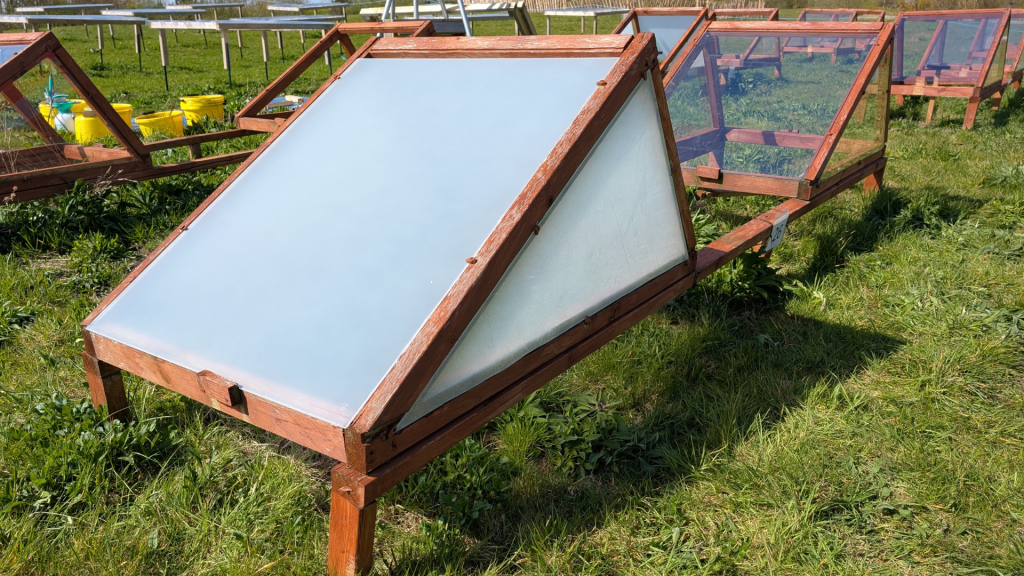
Current projects include collaborations with Pilkington on advanced greenhouse glass technologies, Renolit on specialist greenhouse films and Albotherm on thermally responsive coating systems. Each project addresses different aspects of greenhouse performance, but all share a common objective: improving growing environments for crops while supporting more sustainable food production. Trials have focused primarily on tomatoes and strawberries, two high-value crops that are widely grown under protection and provide useful indicators of crop response to changing light and environmental conditions.
Researchers monitor plant growth, yield, fruit quality and environmental conditions, generating data that can inform both product development and future commercial trials.
Practical and cost-effective
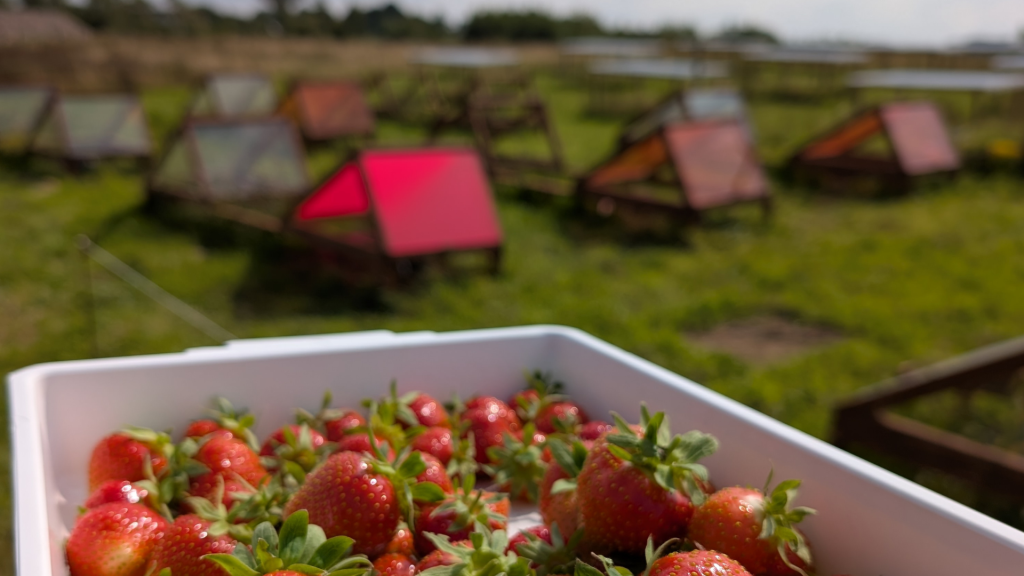
Unlike highly controlled growth chambers, the mini-greenhouses operate under real outdoor conditions. While they are not fully climate controlled, this is a deliberate design choice. The system provides a practical balance between scientific rigour and affordability, allowing a greater number of technologies to be screened before moving to more expensive commercial validation stages. For many innovations, the key question is not whether a technology performs perfectly under ideal conditions, but whether it demonstrates enough promise to warrant further investment. The mini-greenhouse platform is specifically designed to answer that question.
Growing demand
Demand from industry partners continues to increase as organisations seek affordable routes to test new technologies. As a result, the facility is currently being expanded from 24 to 36 mini-greenhouses, increasing testing capacity and enabling a greater number of projects to run simultaneously. The expansion reflects growing recognition that early-stage validation is a critical step in the innovation pipeline. By helping companies de-risk technologies before commercial deployment, the platform is supporting the development of the next generation of greenhouse materials and production systems. Through collaborations with established manufacturers, innovative start-ups and commercial growers, the mini-greenhouse facility demonstrates how targeted research infrastructure can accelerate innovation, reduce development costs and help bring new solutions to market faster.
If you’d like to take part in material testing?
