
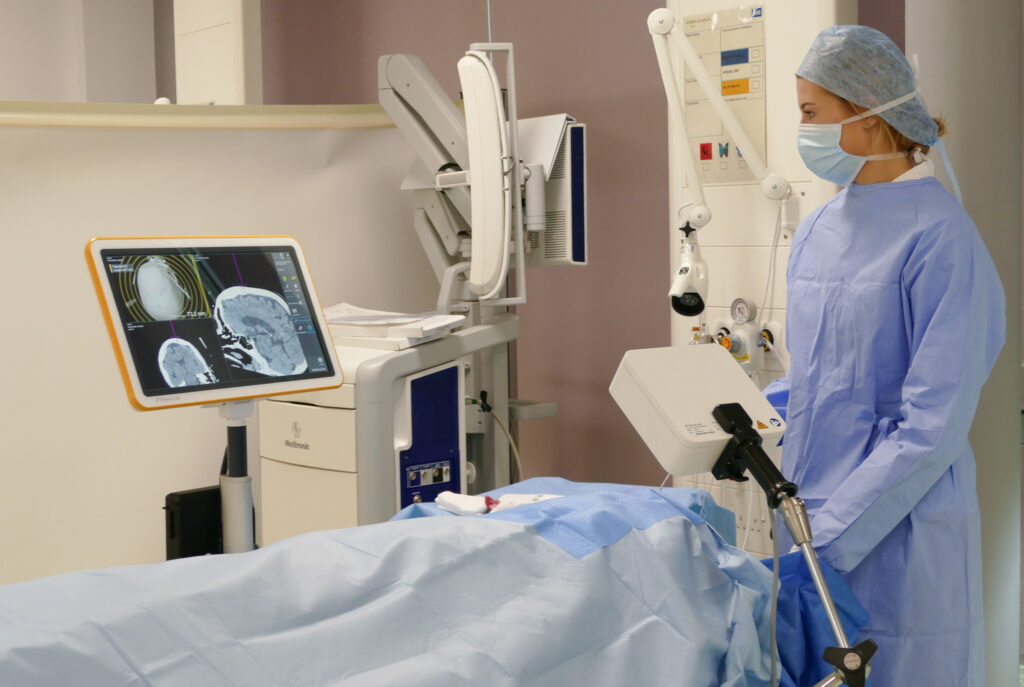
Through expert-led teaching, immersive simulations, and world-class facilities, we collaborated with The Walton Centre NHS Trust to create a transformative programme, equipping neurosurgical trainees with the skills, resilience, and confidence to prevent and manage surgical complications.
Addressing a critical gap in training
Neurosurgery is a field where every decision carries weight. Trainees often encounter highly complex cases, and even minor complications can have serious, life-altering consequences for patients. Yet in traditional training pathways, there is little structured guidance on anticipating, preventing, or managing complications.
Recognising this need, clinicians at The Walton Centre NHS Trust developed the 2.5-day residential programme, ‘The Prevention and Management of Neurosurgical Complications’, and approached us to partner with them. Through the combination of their clinical know-how and networks, and our psychology expertise and specialist facilities, we were able to create a programme packed with insights, tips and hands-on practice, delivered in a supportive learning environment.
Learning from experts
The programme was delivered by a carefully selected faculty incorporating senior neurosurgical professionals and psychology academics, blending theory and practice. Importantly, the programme began with a patient sharing their story of ‘life beyond the knife’, emphasising the importance of communication and empathy.
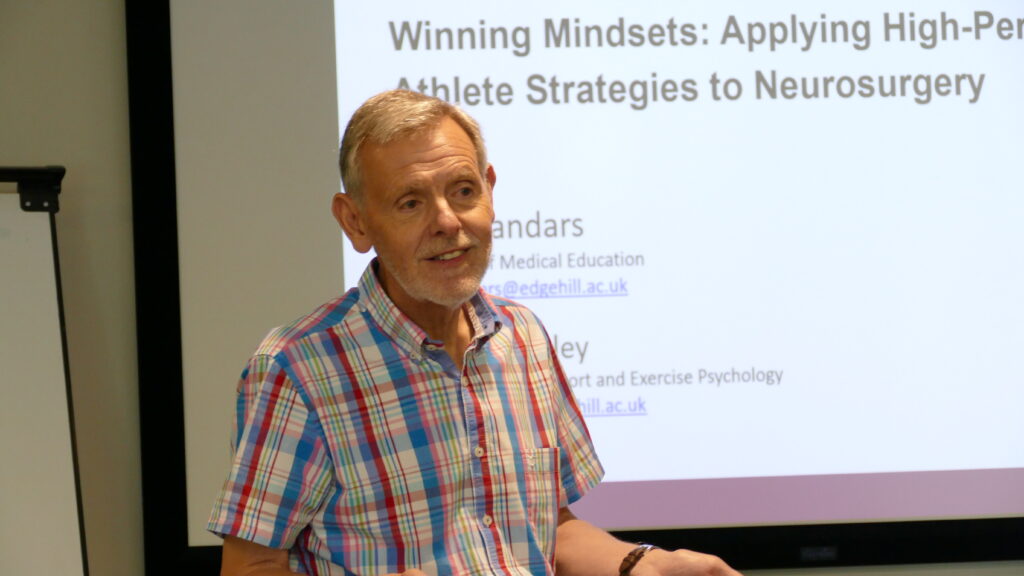
Throughout the two-and-a-half-day course, the programme covered topics including human factors, medico-legal aspects, cranial and spinal complications, work-life balance and expectations of a registrar. Our psychology academics also contributed sessions: Dr Antonio Capozio delivered a session on decision-making; Professor John Sandars and Dr Emma Huntley delivered a session on winning mindsets, applying sport psychology techniques used with elite athletes in the clinical setting; and Dr Lee Hulbert-Williams led a session on personality, coping styles, and stress.
By combining technical, cognitive, and psychological insights, the programme ensured trainees were equipped to prevent and manage complications thoughtfully, calmly, and effectively, safeguarding both patient outcomes and their own professional wellbeing.
Putting learning into practice
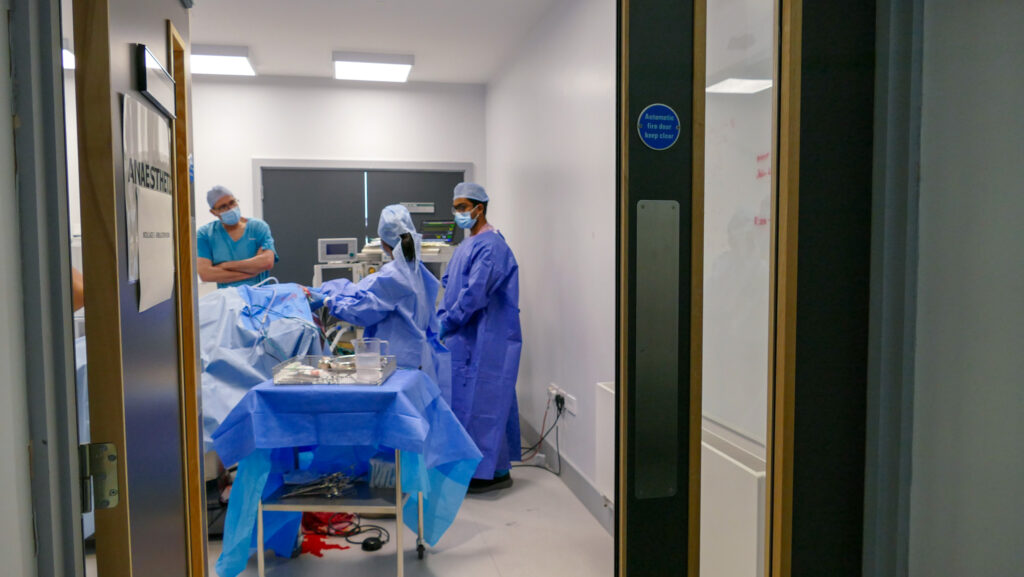
Central to the programme’s success was the ability to gain hands-on experience. Using our state-of-the-art Clinical Skills and Simulation Centre (CSSC), high-tech simulation mannequins and actors, alongside consultants, we created an immersive environment where trainees could safely encounter realistic neurosurgical complications.
Delegates rotated through four moulage stations, including bleeding burr holes, technical equipment failures, consent errors, and high-pressure interactions with senior consultants. These practical simulations allowed trainees to experience real-life challenges without risk to patients or wider repercussions. Each exercise was followed by structured feedback and reflection, allowing trainees to consolidate their learning and build confidence. The simulations were deemed the highlight for participants, praised for their realism and intensity, providing a safe space to make mistakes and learn from them.

The power of collaboration
What made this programme truly successful was the collaboration between The Walton Centre and the University.
The Walton Centre brought unparalleled clinical expertise and a network of speakers, while we provided applied psychology expertise and specialist facilities that allowed the programme to be immersive and realistic. The partnership created a learning environment that balanced practical skills, reflective thinking, and personal development. And because the programme was delivered in the summer months, we were able to offer attendees and faculty a residential package, meaning they could stay on our award-winning campus, right next to the teaching spaces.

A lasting impact
Feedback has been overwhelmingly positive, with trainees leaving the programme better prepared for the realities of neurosurgery. Participants reported increased confidence and said they would recommend the course, praising a boost in soft skills, strategies for managing complications, and practical tips and tools.
Looking forward, we plan to run the programme again in partnership with The Walton Centre, extending its reach to more trainees and consultants across the UK.
“It has been fantastic to work with the Edge Hill team, from the insightful Psychology academics to the technicians who went above and beyond to make the simulations realistic and run like clockwork. We’re really looking forward to next year’s course and have ideas to make it even better – watch this space!”
Farouk Olubajo, Consultant Neurosurgeon at The Walton Centre
