
Author: Claire Wicher, PhD Researcher, Edge Hill University
When I began designing my doctoral research, I knew what I wanted to understand, but deliberately didn’t want to decide exactly how I would explore it on my own. My research looks at how young adults who are not in education, employment or training (NEET) see themselves during and after taking part in a web development course. Having spent several years working with learners in community education, I had seen how learning can change much more than someone’s technical skills. Learners can grow in confidence, discover things they are good at and begin to imagine futures that perhaps hadn’t felt possible before. I wanted to understand how they made sense of those changes.
I had some loose ideas about what the research might look like, but wanted people with lived experience to help shape it. If I was asking questions about something as personal as identity, it didn’t feel right to decide alone how those conversations should happen. This reflects a central idea in participatory research: research should be carried out with people rather than on them (Freire, 1970; Banks & Brydon-Miller, 2018). Therefoe, before starting my main study, I invited four former learners to become co-designers.
Our first workshop was deliberately exploratory. We started by thinking about identity itself, using Kuhn’s Twenty Statements Test (TST) (Kuhn & McPartland, 1954) as an introductory activity. TST asks people to complete “I am…” up to twenty times, which I thought would fit with the idea that identity isn’t fixed but develops through our experiences, roles and interactions with others (Mead, 1934; Stryker, 1980). I expected it to get us thinking.
![Examples of responses from Kuhn's 20 statements, e.g. I am of the female sex; My age is 10; I am from [city and state]; I have two parents](https://blogs.edgehill.ac.uk/educational-insights/wp-content/uploads/sites/429/2026/09/Kuhn.png)
Figure 1: Example of results from Kuhn’s Twenty Statements, Kuhn, 1960
It turned out to be much more important than that. Several co-designers found the exercise surprisingly difficult. One person’s immediate reaction was, “I don’t know who I am.” Another joked, “I didn’t realise Kuhn’s 20 statements were going to cause an existential crisis.” An activity normally completed in around eight to ten minutes took this group an average of 42. One participant explained that, because of her autism, vague questions could make her panic because she first had to work out what she was actually being asked. If I had asked for her age, ethnicity or three personality traits, she would have known what I wanted. “I am…” was much harder.
I was surprised that such a seemingly simple activity had proved so difficult. It wasn’t intended as my research method; it was supposed to get us thinking about identity. Yet it revealed something important. Participants didn’t struggle because they had nothing to say about themselves, because when we changed the conversation, they had an enormous amount to say.
Instead of asking co-designers to define who they were, we talked about their experiences as journeys: where they started, significant moments, challenges and things that had changed. People talked about beginning the course believing they weren’t clever enough, then experiencing moments when something clicked or encouragement made them think, “I can actually do this.” They talked about confidence, belonging and isolation. One reflection has particularly stayed with me: “I thought I was introverted — turns out I was just isolated.”
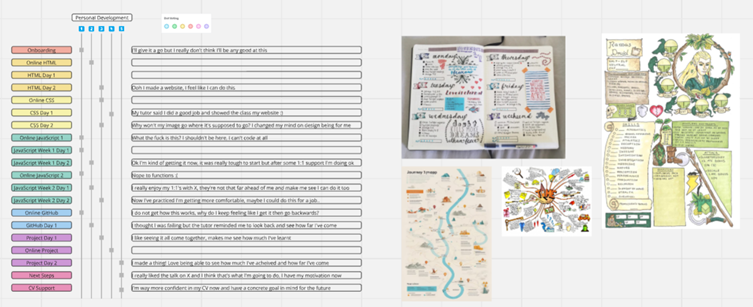
Figure 2: Screenshot of the collaborative Miro board created during the first co-design workshop
The metaphors people used were equally revealing. One described their experience as riding the Oblivion rollercoaster – a slow climb followed by everything suddenly happening at once. Another described climbing a mountain, then realising they didn’t need to reach the summit; getting somewhere that worked for them was enough. These stories told me far more about how people saw themselves than asking them directly to explain their identity. This reflects how storytelling can help us connect experiences and make sense of who we are and how we have changed (Clandinin, 2023; Neimeyer & Levitt, 2001).
That discovery shaped our second workshop. Instead of questions explicitly asking how learners’ identities had changed, I brought questions about journeys for the co-designers to test: Where were you when you started? What were the important turning points? What challenged you? What did you take away? What happens next? Together, we discussed what worked, what didn’t and what was missing. The eventual research method emerged through co-design rather than arriving fully formed .
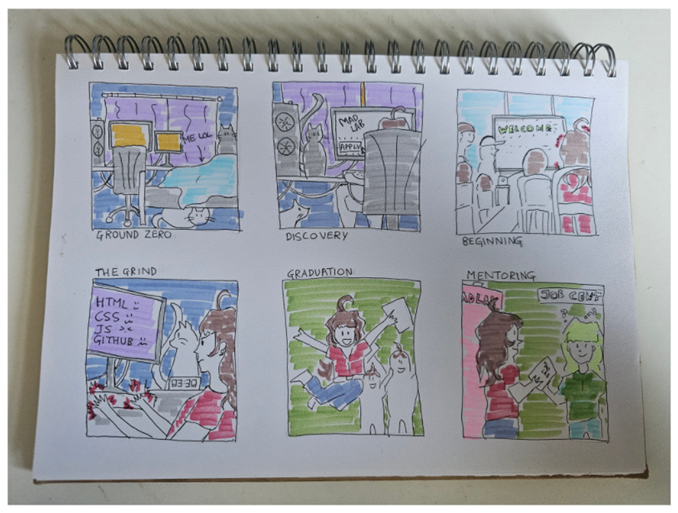
Figure 3: Example storyboard produced for the focus group session
For me, this demonstrates why co-design matters. Researchers bring expertise, but we don’t bring all the expertise. I could read theories about identity and research methods, but I couldn’t know how my questions would feel to the person being asked them. Participatory research recognises lived experience as expertise in its own right (Aldridge, 2016). While the co-designers couldn’t influence every aspect of my doctoral research, they could genuinely influence what happened next – and they did.
The experience has also made me think differently as an educator. We regularly ask learners about their strengths, weaknesses, goals and aspirations. We ask who they are and who they want to become, often expecting an answer straight away. For someone whose relationship with education or employment has been complicated, those questions can be much bigger than they first appear.
I began this research wanting to understand how learners’ identities might change through education. One of the most valuable things my co-designers have taught me is that I don’t necessarily need to ask who they are to find out. Sometimes asking where have you been, what happened along the way, and where might you go next? gives us a much richer answer.
References
Aldridge, J., 2016. Participatory research: Working with vulnerable groups in research and practice. Policy Press.
Banks, S. and Brydon-Miller, M., 2018. Ethics in participatory research for health and social well-being. London: Routledge.
Clandinin, D.J. (2023) Engaging in narrative inquiry. Second edition. New York, NY: Routledge.
Freire, P. (1970). Pedagogy of the Oppressed. Continuum.
Kuhn, M.H. and McPartland, T.S., 1954. Twenty statements test. American Sociological Review.
Mead, G. H., 1934. Mind, Self and Society. Chicago: University of Chicago Press. Available at: http://tankona.free.fr/mead1934.pdf.
Neimeyer, R., & Levitt, H., 2001. Constructivism/Constructivist methodology, In Smelser, N., & Baltes, P., Eds. International Encyclopedia of the Social and Behavioural Sciences. Elsevier Science Ltd. pp 2654-2659.
Stryker, S. (1980). Symbolic Interactionism: A Social Structural version. New Jersey: USA, The Blackburn Press.
Biography
Claire Wicher is a doctoral researcher at Edge Hill University and works in adult vocational education, designing and delivering technology programmes for learners from a wide range of backgrounds. Her research explores how young adults who are not in education, employment or training (NEET) experience identity development through learning, with a particular interest in learner voice, co-design and participatory research. You can connect with Claire on LinkedIn at https://www.linkedin.com/in/girlgeekupnorth/
